
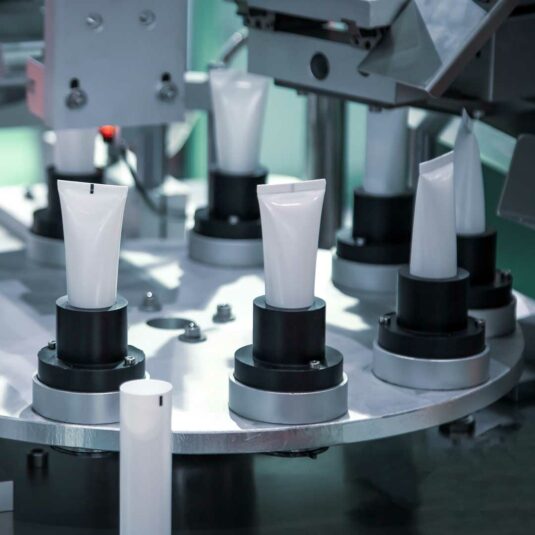
Verpackungsgesetz verpackte Waren bei der Produktion

The German Packaging Act (VerpackG) – what’s it all about?

The German Packaging Act, known as the VerpackG, is a German federal law. It came into force on 1 January 2019 to implement the European Packaging Directive 94/62/EC in Germany. Each EU country has its own packaging legislation, and the VerpackG only applies to the Federal Republic of Germany. In general terms, the VerpackG regulates the initial distribution, return and recovery of packaging.

The Ordinance on the Avoidance of Packaging Waste (VerpackV) was passed in 1991. It was the first official regulation that made manufacturers responsible for the disposal of their products and packaging. The aim of the Packaging Ordinance was to avoid the creation of packaging and to regulate its recovery. On 1 January 2019, it was replaced by the German Packaging Act (VerpackG). To understand the current legislation, we recommend that you focus on the Packaging Act.

The Packaging Act is regularly amended to keep it up to date. The two most recent amendments came into force on 3 July 2021 and 1 July 2022. A detailed description of these amendments can be found here.

Why is there a Packaging Act?

The aim of the law is to minimise the environmental impact of packaging. Any packaging that can’t be avoided should be reusable or at least recyclable. To this end, the law defines who is responsible for the packaging: the party that first places the packaged goods on the market.

What does the German Packaging Act say?

In Europe, packaging is covered by the Extended Producer Responsibility (EPR): Anyone who manufactures and/or distributes a product should consider the disposal of the product at the end of its service life from the design stage. This also applies to the packaging of the product.

Anyone that places packaged goods on the market should, therefore, also be responsible for the environmentally sound disposal of their packaging. By law, the initial distributor of packaged goods is responsible for the collection, sorting and recycling of the packaging in question. As it would be impossible and extremely inefficient for each distributor to collect and sort their own packaging, this task is assigned to the dual systems.

This ensures that as much of the packaging subject to mandatory participation as possible is properly collected from consumers, sorted and recycled. Companies pay a licence fee to the system in which they participate, the amount of which depends on the material type and weight (mass) of the sales packaging.

Packaging licensing

Become compliant and participate in the system in just 3 steps.

ZSVR: Who monitors compliance with the German Packaging Act?

The German Packaging Act led to the establishment of the Osnabrück-based Central Agency Packaging Register (ZSVR), which has a wide range of tasks:

  • The ZSVR is an impartial institution with the task of helping to monitor compliance with the law by companies.
  • It is responsible for establishing a transparent and fair system for distributing the costs of waste disposal
  • and to crack down on deficient participation. It is the ZSVR’s task to check whether all businesses subject to mandatory participation actually do participate in a dual system.

For this purpose, the ZSVR operates the LUCID Packaging Register, an internet platform where producers must register. Using information from the dual systems, the central register can the check which companies are subject to mandatory participation, and verify that they have actually paid fees to a dual system. If the ZSVR suspects non-compliance, it reports the company to the competent enforcement authorities. Violations against the VerpackG constitute a regulatory offence, punishable by hefty fines and sales bans. The Federal Environmental Agency is responsible for supervising the central register.

What types of packaging are covered by the Packaging Act?

Essentially, the German Packaging Act distinguishes between “packaging with mandatory participation” and “packaging without mandatory participation”.

What’s the difference?

  • With mandatory participation:
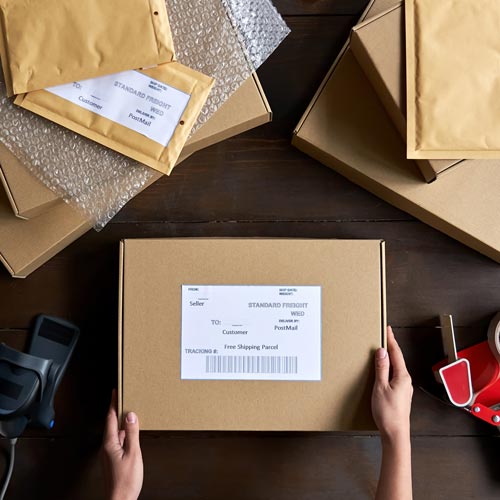
    Initial distributors who are subject to mandatory participation must sign a licence agreement with a dual system and bear the costs of collection, sorting and recovery of the packaging, because sales packaging and grouped packaging usually end up with the consumer, who disposes of them in the yellow bag/bin, or in paper bins or glass containers. Examples include wine bottles and yoghurt tubs, but also bread bags and shipping packaging.
  • Without mandatory participation:
    Packaging that doesn’t end up with the consumer, however, is not subject to mandatory participation. There are special take-back schemes for reusable containers, returnable beverage packaging and transport packaging.


An amendment to the Packaging Act, which came into force on 1 July 2022, makes registration with the Central Agency Packaging Register (ZSVR) mandatory, irrespective of whether participation in the dual system is mandatory. Every producer must register with the ZSVR in the LUCID Packaging Register, regardless of the type of packaging used.

VerpackG: What exactly do initial distributors need to do?

To meet the obligations of the Packaging Act with regard to packaging that is subject to mandatory participation, manufacturers, importers, retailers, mail-order companies and online retailers must comply with the following points:

Packaging licensing

Complying with the German Packaging Act has never been easier.

Packaging laws in other countries

A brief digression

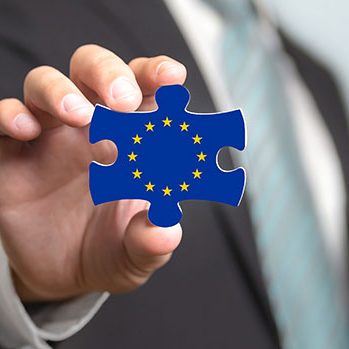
There is no single EU-wide packaging law. If you want to export and sell packaged products in other EU countries, you’ll find yourself in a confusing maze of national laws and regulations. What’s more, the regulations are usually written in the national language of the country concerned, with few texts available in English. In order to comply with the law at all times and to avoid any violations, you need to obtain information from a number of different sources.

We are here to help you participate with your packaging, not only in Germany, but in other EU countries as well. We can take care of all the necessary formalities of an EU licensing process to give you peace of mind when exporting your goods within the EU.

Bild für EU Lizenzierung