

PPWR und Recyclingfähigkeit? 7 Tipps, um Ihre Verpackung nach PPWR Vorgaben hochgradig recyclingfähig zu gestalten
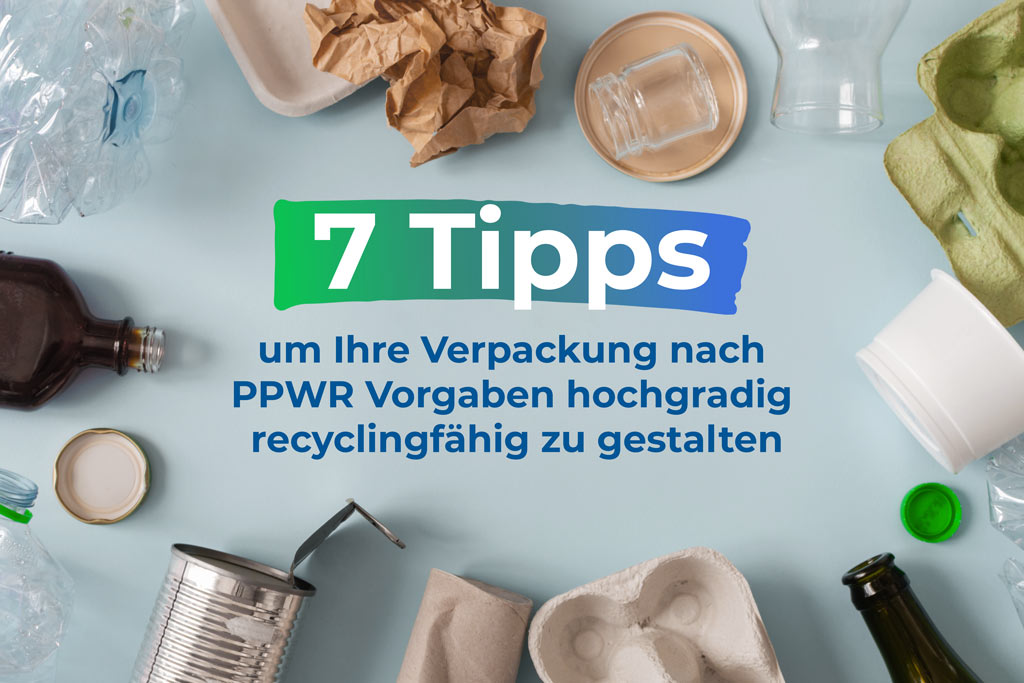
Die Recyclingfähigkeit von Verpackungen gewinnt zunehmend an Bedeutung – nicht nur für die Umwelt, sondern auch für die Erfüllung gesetzlicher Anforderungen. Nach PPWR Verordnung gibt es u.a. Vorgaben für Verpackungen in Sachen Recyclingfähigkeit. Sie legt fest, dass alle in Verkehr gebrachten Verpackungen ab dem Jahr 2030 recyclingfähig sein müssen. Außerdem müssen Mindestanteile an recyceltem Material enthalten sein und Überverpackungen (z.B. Pappschachtel um Zahnpastatube) vermieden werden. Schädliche Materialien werden verboten und Hersteller tragen eine erweiterte Verantwortung für die Entsorgung und Verwertung ihrer Verpackungen.
Peter El-Gazzar, Spezialist für Recyclingfähigkeit und Projektleiter des Noventiz Recyclingsiegels „rotate“, hat 7 Tipps zusammengestellt, wie Verpackungen die PPWR Vorgaben in Punkto Recyclingfähigkeit erfüllen.
PPWR und Recyclingfähigkeit
PPWR & RECYCLINGFÄHIGKEIT
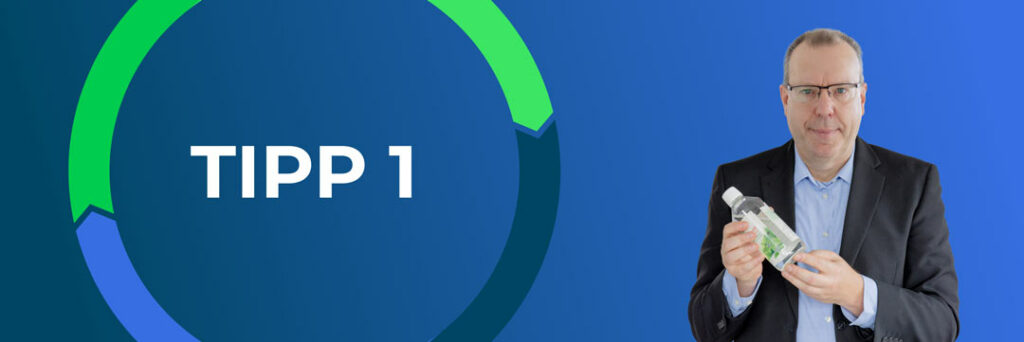
Tipp 1: Vermeiden Sie großflächige Etiketten
Wenn Etiketten aus anderem Material als die Verpackung bestehen, können diese die Sortierung erschweren. Ein Beispiel dafür ist ein Etikett aus Papier, das auf eine Kunststoffverpackung aufgeklebt wurde. Bedeckt das Etikett z.B. mehr als 50 % der Verpackung, ist die Wahrscheinlichkeit sehr hoch, dass diese Kunststoffverpackung nicht in die richtige Fraktion aussortiert wird und die Recyclingfähigkeit so eingeschränkt wird und das obwohl die Verpackung grundsätzlich recyclingfähig ist.
Die Folge: Hochwertiger Wertstoff geht im Recyclingprozess verloren, obwohl die Verpackung grundsätzlich recyclingfähig wäre.
Verwenden Sie also Etiketten, die aus dem gleichen Material wie die Verpackung bestehen und begrenzen Sie deren Größe. So bleibt die Sortierfähigkeit erhalten und der Recyclingprozess wird nicht beeinträchtigt. So tragen Sie dazu bei, die Anforderungen der PPWR zu erfüllen und eine effiziente Kreislaufwirtschaft zu fördern, denn die PPWR fordert ab 2030 eine Recyclingfähigkeit aller Verpackungen. Etiketten, die die Sortierfähigkeit von Verpackungen behindern, stehen im direkten Konflikt mit diesem Ziel.
PPWR & RECYCLINGFÄHIGKEIT
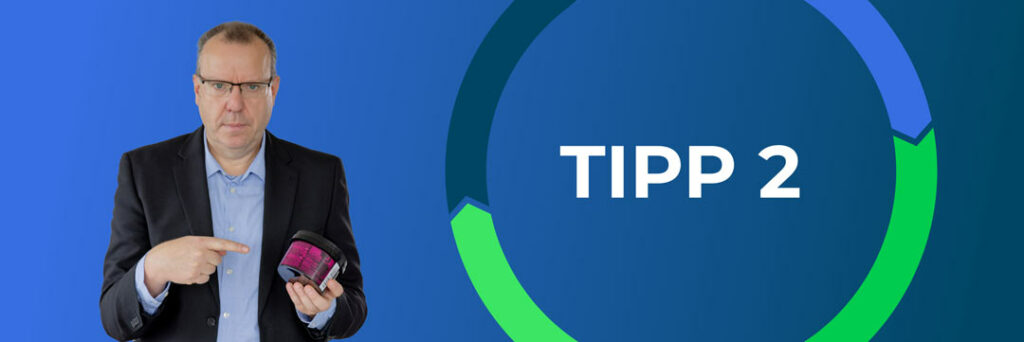
Tipp 2: Vermeiden Sie schwarze Kunststoffverpackungen
Schwarze Kunststoffverpackungen sind schwer zu recyceln und landen häufig in Verbrennungsanlagen statt im Recyclingkreislauf. Sie stellen eine große Herausforderung für die Recyclingfähigkeit dar, denn ihre dunkle Rußfärbung macht sie für Infrarot-Scanner in den Sortieranlagen schwer erkennbar. Obwohl es fortschrittliche Technologien gibt, die schwarze Kunststoffe erkennen können, sind diese bisher nur in wenigen Anlagen verfügbar.
Stattdessen sollten auf ungefärbte Verpackungen gesetzt werden. Diese sind hochgradig recyclingfähig, da sie im Sortierprozess aufgrund ihrer Eigenschaften im Nahinfrarotbereich gut erkannt werden können.
Der Einsatz von hellen Farben und Monomaterialien fördert die Herstellung von Regranulaten, schließt den Recyclingkreislauf und ermöglicht es Unternehmen, ihren Verpflichtungen gemäß der PPWR nachzukommen, während sie gleichzeitig einen Beitrag zu einer ressourcenschonenden Zukunft leisten.
PPWR & RECYCLINGFÄHIGKEIT
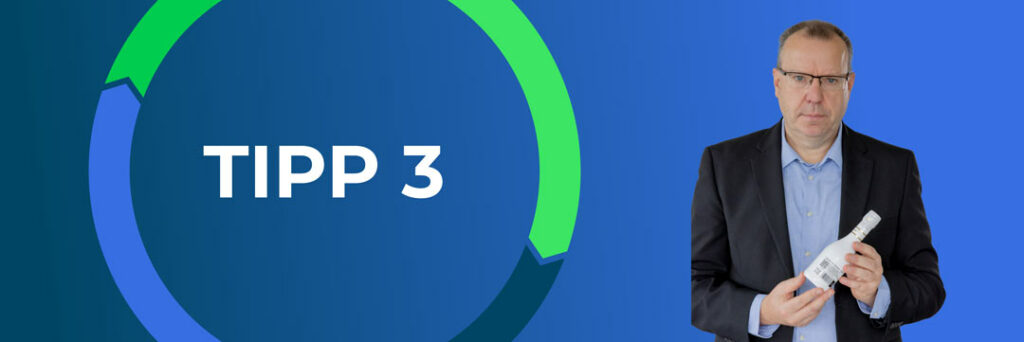
Tipp 3: Vermeiden Sie Keramikkomponenten und bevorzugen Sie transparente Glasflaschen
Glasverpackungen ohne Transparenz/Transluzenz (partielle Lichtdurchlässigkeit) weisen eine eingeschränkte Recyclingfähigkeit auf und erfordern laut Mindeststandard eine zusätzliche, kostenpflichtige Messung zur Identifikation. Bei Keramikkomponenten gibt es sogar eine Recyclingunverträglichkeit. Ein Beispiel dafür sind farbige Sektflaschen oder Glasverpackungen mit Kunststoff-Haftetiketten, sofern es sich um wasserfeste/hydrophobe Haftetiketten handelt. Hier ist keine Lichtdurchlässigkeit gegeben und die Scherben werden nicht dem Recyclingkreislauf zugeführt. Nicht erkannte Glasscherben gehen im Recyclingprozess verloren. Das bedeutet nicht nur einen Verlust an wertvollen Rohstoffen, sondern auch eine Verschwendung von Energie und Ressourcen, die für die Herstellung von neuem Glas benötigt werden.
Die PPWR fordert effiziente Recyclingprozesse und setzt klare Anforderungen an die Recyclingfähigkeit von Verpackungen. Transparente Glasflaschen eignen sich optimal für die Sortierung, während Keramikkomponenten Recyclingunverträglichkeiten verursachen und die Wiederverwertung beeinträchtigen. Durch den Einsatz transparenter Glasverpackungen und den Verzicht auf Keramikkomponenten erfüllen Sie somit die Anforderungen der PPWR und tragen gleichzeitig zu einer ressourcenschonenden Kreislaufwirtschaft bei.
PPWR & RECYCLINGFÄHIGKEIT
Tipp 4: Vermeiden Sie Haftetiketten aus Kunststoff auf Glasverpackungen
Haftetiketten aus Kunststoff beeinträchtigen die Recyclingfähigkeit von Glasverpackungen erheblich. Diese Etiketten lösen sich im Recyclingprozess nicht von der Glasoberfläche und wirken als Störstoffe. Dadurch wird das Recycling beeinträchtigt. Gemäß dem Mindeststandard der Zentralen Stelle müssen die Flächen, auf denen das Etikett angebracht ist, prozentual von der Quote abgezogen werden.
Setzen Sie auf Papieretiketten oder andere Materialien, die sich leicht von der Glasoberfläche lösen lassen und den Recyclingprozess nicht stören. So erfüllen Sie die Anforderungen der PPWR, indem sie recyclingfreundliche Materialien benutzen.

PPWR & RECYCLINGFÄHIGKEIT
Tipp 5: Achten Sie auf den Mindeststandard bei biologisch abbaubaren Verpackungen
Laut der PPWR müssen ab 2030 alle Verpackungen recyclebar sein (mindestens 70 % Recyclingfähigkeit). Verpackungen, die als biologisch abbaubar oder kompostierbar gelten, haben keine etablierte Recyclinginfrastruktur.
Gemäß dem Mindeststandard der zentralen Stelle ist bei Verpackungen von biologisch abbaubaren oder kompostierbaren Kunststoffen, PLA, Zellulosehydrat, Keramik oder Naturmaterialien wie Holz ist grundsätzlich vom Fehlen einer Recyclinginfrastruktur auszugehen. Sie werden üblicherweise im Sortierprozess nicht entnommen, erfahren deshalb kein Recycling und sind grundsätzlich als nicht recyclingfähig einzustufen.
Verwenden Sie Verpackungsmaterialien, die gemäß dem Mindeststandard der Zentralen Stelle recycelt werden können, um den Anforderungen der PPWR, die ab 2030 gelten gerecht zu werden. Eine Verwertung über die Biotonne ist ebenfalls nicht empfehlenswert, da auch hier die Recyclingziele nicht erreicht werden.

PPWR & RECYCLINGFÄHIGKEIT
Tipp 6: Verwenden Sie Monomaterialien und nachhaltige Klebstoffe
Verbundmaterialien und nicht wasserlösliche Kleber auf Verpackungen erschweren das Recycling erheblich. Beispielsweise beeinträchtigen solche Elemente die Trennung von Wertstoffen in Sortieranlagen. Verpackungen, mit geringer Recyclingfähigkeit, führen zu Mehrkosten oder sogar rechtlichen Konsequenzen durch neue Vorschriften wie die PPWR. Ab 2030 müssen alle Verpackungen zu mindestens 70% recycelbar sein. Setzen Sie auf Monomaterialien und verwenden Sie Kleber, die sich im Recyclingprozess leicht lösen lassen, um die Vorschriften der PPWR zu erfüllen.

PPWR & RECYCLINGFÄHIGKEIT
Tipp 7: Setzen Sie Rezyklate ein
Verpackungen bestehen oft aus Primärrohstoffen, obwohl Rezyklate eine nachhaltige Alternative darstellen. Eine mangelnde Recyclingfähigkeit und eine zu geringe Nachfrage nach recycelten Materialien führt zu einer ineffizienten Nutzung des Recyclingkreislaufs.
Wertvolle Ressourcen werden verschwendet, und der Lebenszyklus von Materialien bleibt ungenutzt.
Die PPWR legt ab dem 01.01.2030 fest:
Der Kunststoffanteil an recycelten Materialien, die aus Verbraucher-Kunststoffabfällen zurückgewonnen werden müssen:
- 30 % bei kontaktempfindlichen Verpackungen mit PET als Hauptbestandteil;
- 10 % bei kontaktempfindlichen Verpackungen aus anderen Kunststoffmaterialien als PET, ausgenommen Einweggetränkeflaschen aus Kunststoff;
- 30 % bei Einweggetränkeflaschen aus Kunststoff;
- 35 % bei anderen, bisher nicht genannten Kunststoff-Verpackungen.
(Ausnahmen bei Primärverpackungen, Verpackungen von Medizinprodukten oder kompostierbare Kunststoffverpackungen)
Designen Sie Ihre Verpackungen recyclingfähig, fördern Sie sortenreine Abfallsammlungen und nutzen Sie technische Verfahren zur Rückgewinnung von Rezyklaten. So kann der Einsatz von Primärrohstoffen verringert werden. Integrieren Sie Rezyklate in Ihre Verpackungsdesigns, um den PPWR-Vorgaben zu entsprechen und einen nachhaltigen Beitrag zur Kreislaufwirtschaft zu leisten.
Einen Überblick und die Zusammenfassung zur PPWR Verordnung finden Sie hier: Überblick und Zusammenfassung zur PPWR Verordnung
Erfüllen Sie auch die PPWR Vorgaben in Punkto Recyclingfähigkeit
Die Recyclingfähigkeit von Verpackungen spielt eine zentrale Rolle in der PPWR-Verordnung. Diese fordert ab 2030 recycelbare Verpackungen mit steigendem Rezyklatanteil. Unternehmen sollten deshalb bereits jetzt ihr Verpackungsdesign optimieren, um gesetzliche Vorgaben zu erfüllen und die Kreislaufwirtschaft zu stärken.
Weitere Informationen:
Kontaktieren Sie unseren Projektmanager rotate

- Peter El-Gazzar
- +49 221-800 158 420
- peter.el-gazzar@noventiz.de
- auf LinkedIn vernetzen
Wir sind Experten rund um die Verpackungslizenzierung, alle Rücknahmelösungen und Bewertung der Recyclingfähigkeit nach §21 VerpackG.
Auf dem Laufenden bleiben mit Noventiz
Bei Noventiz unterstützen wir Unternehmen Deutschland- und europaweit in allen Fragen zur Umwelt-Compliance. Haben Sie Fragen zu unseren EPR-Leistungen?